Showing posts with label Gardens in the USA. Show all posts

Monday, February 9, 2009

Bartlett Arboretum and Gardens

The Bartlett Arboretum and Gardens contains 91 acres (37 hectares) of parkland, gardens, and landscapes that focus on the regional plants, ecology and character of Southwestern New England. The Arboretum is open and accessible to the public every day of the year. It is located at 151 Brookdale Road in Stamford, Connecticut, USA.

The Arboretum started in 1913, when Dr. Francis A. Bartlett, an eminent dendrologist and founder of the F.A. Bartlett Tree Expert Company, acquired "30 acres [12 hectares] more or less" of North Stamford woodland to use as his residence, training school and research laboratory for his company. Over the years he assembled a large number of plant specimens on the property from all over the world. In 1965, when the research laboratory moved to North Carolina, the Stamford site, then covering more than 60 acres (24 hectares), was purchased by the State of Connecticut and designated the Connecticut State Arboretum. In 1993, the land and overall operation of the Arboretum were transferred to the University of Connecticut at Stamford. In 2001, the land was transferred to the City of Stamford and operations were transferred to the Bartlett Arboretum Association an independent non-profit organization. The Bartlett Arboretum Association continues to operate the grounds today.

In January 2007, the Arboretum started offering a landscaping class for Spanish-speaking landscapers. Although taught in English, key words and expressions are translated into Spanish. The landscapers are taught subjects such as proper planting, mulching and pruning, and safety rules, and they receive a certificate at the end of the course.

In 2006 the Arboretum began numerous research programs, continuing the tradition of research begun by Dr. Bartlett nearly a century earlier. Current research focuses on local plant ecology such as floristics and herbivory responses of Connecticut Forests, and the ecology and evolution of tropical plants, particularly the Araceae. This work has led to several published research papers by staff in the past few years.

The Herbarium of the Bartlett Arboretum, open to the public Monday - Thursday and by appointment, is a rapidly expanding collection of over 3500 specimens. The Arboretum plans a doubling of this collection by 2009. While most specimens are from the Northeastern United States, the collection also houses material from the Southeastern Unites States and Adjacent Mexico (200), the Caribbean (100), Amazonian Peru (150), the former Soviet Union (200),and Africa (100). This collection includes approximately 2,500 species of vascular plants, and 1,000 species of Bryophyte. The collection currently houses one type specimen.


from wikipedia.org
images from flickr users: Puzzler4879, gailf548, Archman8, Brooklyn Bridge Baby,

Saturday, December 6, 2008
Western Colorado Botanical Gardens

The Western Colorado Botanical Gardens 12 acres (49,000 m²) are botanical gardens located at the southern end of 7th Street in Grand Junction, Colorado, USA. The gardens are public, and financed by admission fees and donations. Founded in 1994, The Gardens have been dramatically increasing the size of the facility since 2003.

The Gardens have reclaimed a downtown site previously filled with thousands of used tires, junk car parts, and dead batteries. The debris has been replaced with a 4000 square foot (370 m²) greenhouse and butterfly house, featuring over 600 orchids and other tropical plants from around the world. A variety of outdoor gardens have been developed and/or planned, including a Cactus and Succulent Garden, Children's Secret Garden, Harmony In Color Garden, International Garden, Native Garden, Seasonal Xeric Garden, and Sensory Garden.

The Native Garden is a miniature replica of Colorado's Grand Valley, including the Grand Mesa, the Colorado National Monument and Mount Garfield, with plantings related to the 13 geological zones of Western Colorado.

The Cactus and Succulent Garden displays native cactus species, as well as other cold-hardy cactus and succulent plants.


from wikipedia.org
images from:flickr user curious spider, home-and-garden.webshots.com

Saturday, November 15, 2008

Denver Botanic Gardens


The Denver Botanic Gardens is a public botanical garden located in Denver, Colorado in the Cheesman Park neighborhood. The 23-acre (93,000 m2) park contains a conservatory, a variety of theme gardens and a sunken amphitheater, which hosts various concerts in the summer. Woody Allen's 1973 movie Sleeper filmed some scenes at the gardens.

The Japanese Garden at the Denver Botanic Garden is called Shofu-en -- the Garden of Wind and Pines. It was designed by Koichi Kawana.

The Denver Botanic Gardens, along with nearby Cheesman Park and Congress Park, sit atop what used to be the city's cemetery. Although many of the bodies were removed in the 1950s, graves have been found as recently as 2008 during construction of an underground parking structure.


from wikipedia.org

images from picasa user: xuxiao

Friday, October 17, 2008

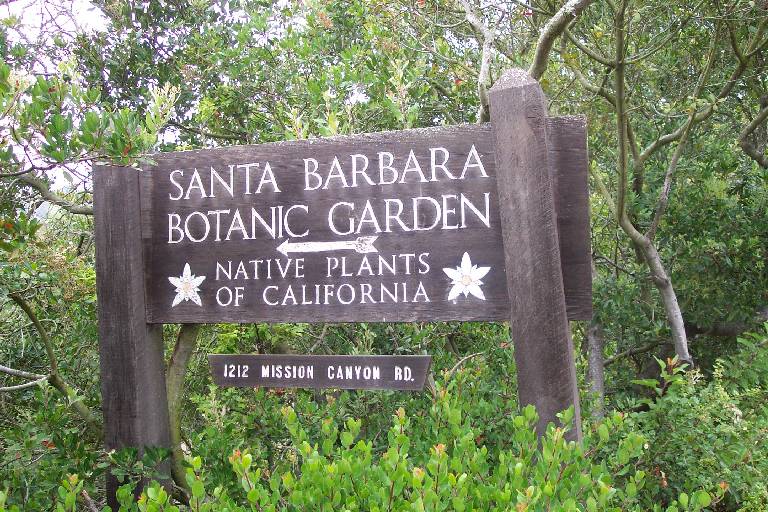
The Santa Barbara Botanic Garden


The Santa Barbara Botanic Garden is a 26 ha (65 acre) garden, containing over 1,000 species of rare and indigenous plants. It is located in Mission Canyon, Santa Barbara, California, USA.


The purpose of the Garden is to display California native plants in natural settings. There are approximately 9.2 km (5.5 miles) of hiking trails within the garden. Mission Creek flows through the premises, and includes a rock dam which was constructed in 1806 by Native Americans (mainly CanaliƱos) under the direction of the Spanish padres of the adjacent Mission Santa Barbara. From now until 2007, the Garden is home to Patrick Dougherty's latest sculpture, Toad Hall, a two-story tower and a maze of pathways and chambers made of twisted and woven willows.


The Garden was founded in 1926 and designed by noted landscape architect Beatrix Farrand. By 1936 its focus had narrowed to plants native to the California Floristic Province (which includes a bit of southwestern Oregon and part of Baja California, as well as most of the state of California). The Garden became a Santa Barbara County Landmark in 1983 (the dam on Mission Creek was already designated as a State Historic Landmark).

The Garden has a plant breeding program. Plant introduction include Aesculus californica 'Canyon Pink', Agave shawii, Arctostaphylos 'White Lanterns', Arctostaphylos 'Canyon Blush', Arctostaphylos insularis 'Canyon Sparkles', Artemisia californica 'Canyon Gray', Berberis aquifolium 'Mission Canyon', Ceanothus 'Wheeler Canyon', Ceanothus 'Far Horizons', Ceanothus arboreus 'Powder Blue', Eriophyllum nevinii 'Canyon Silver', Fremontodendron 'Dara's Gold', Heuchera 'Blushing Bells', Heuchera 'Canyon Belle', Heuchera 'Canyon Chimes', Heuchera 'Canyon Delight',Heuchera 'Canyon Duet', Heuchera 'Canyon Melody', Heuchera 'Canyon Pink', Heuchera 'Dainty Bells', Heuchera 'Pink Wave', Iris 'Canyon Snow', Lessingia filaginifolia 'Silver Carpet', Leymus condensatus 'Canyon Prince', Salvia 'Dara's Choice', Salvia cedrosensis 'Baja Blanca', Salvia leucophylla 'Amethyst Bluff', and Verbena lilacina 'De La Mina'.


from wikipedia.org

Monday, October 13, 2008

The Betty Ford Alpine Garden

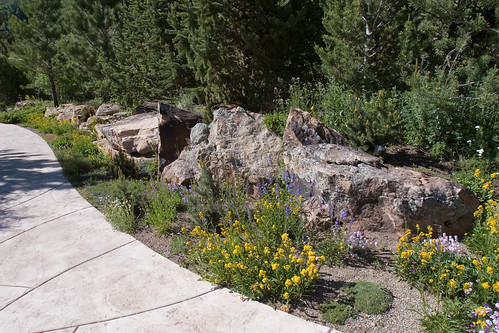
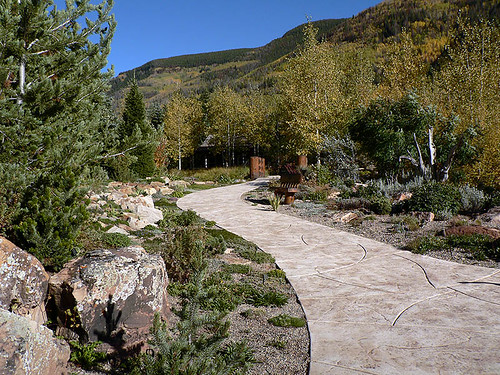
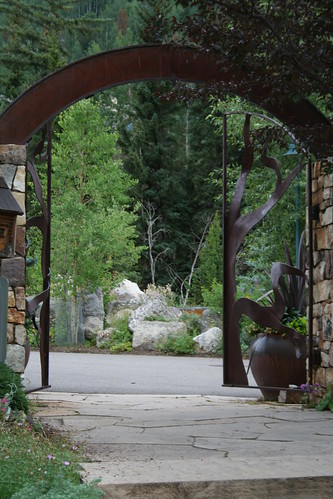
The Betty Ford Alpine Gardens are the world's highest botanical garden, located at 183 Gore Creek Drive, Vail, Colorado, USA, at an 8,200 feet altitude in the Rocky Mountains. The Gardens are open to the public daily from Memorial Day to Labor Day.

The Gardens were founded by Vail and Denver horticulturists in 1985, with subsequent planting of the Alpine Display Garden (1987), Mountain Perennial Garden (1989), Mountain Meditation Garden (1991), and the Alpine Rock Garden (1999) with its stunning 120-foot waterfall. Other gardens include the Children's Garden and Schoolhouse Garden. Together these gardens contain about 2,000 varieties of plants, including over 500 different varieties of wildflowers and alpine plants.


from wikipedia.org
images from flickr users: Jean., Lou Springer

Thursday, October 9, 2008

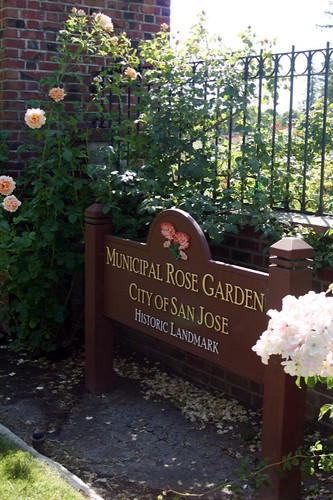
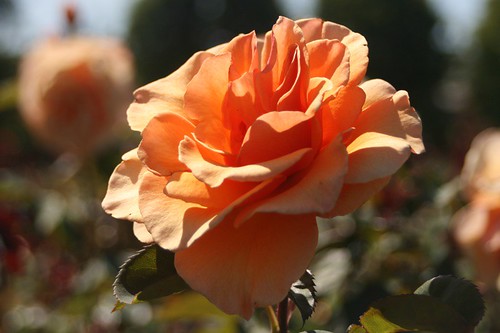
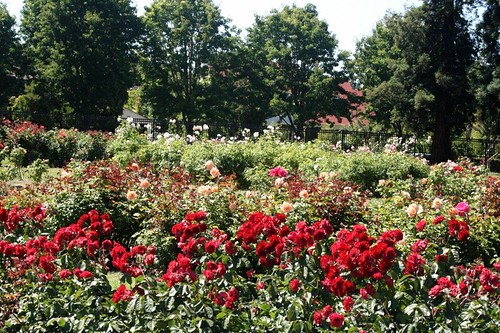
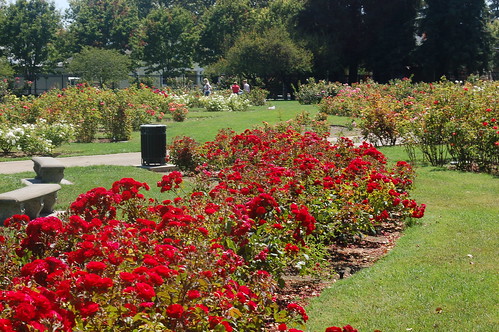
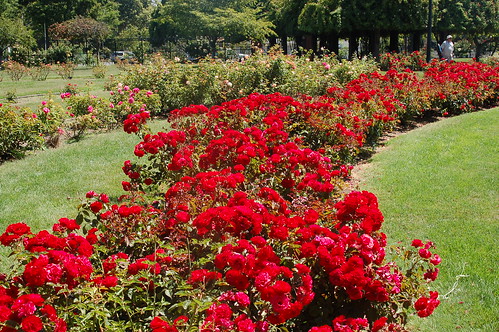
San Jose Municipal Rose Garden

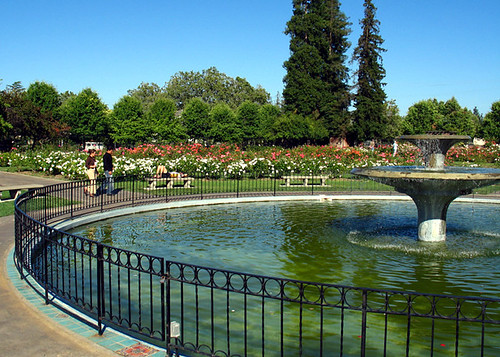
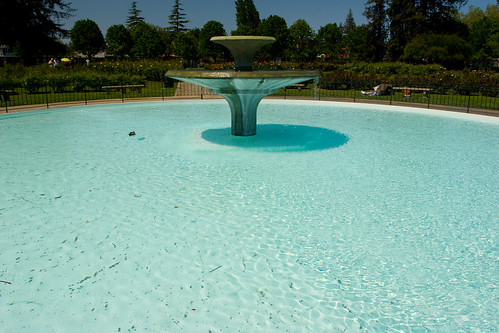
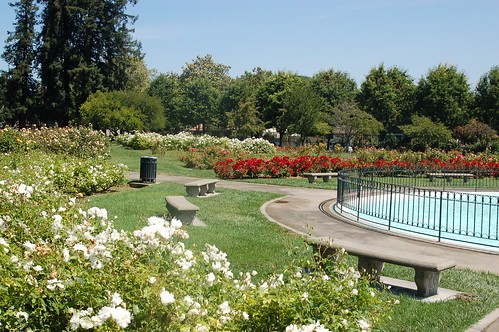
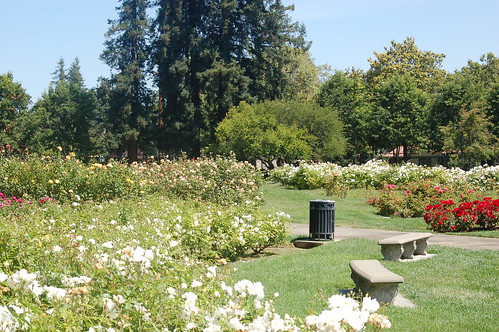
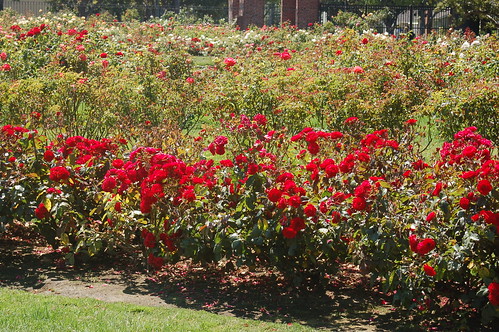
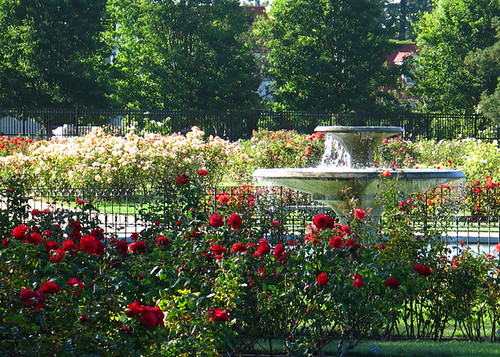
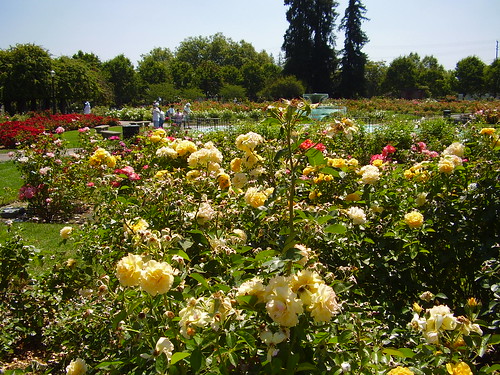
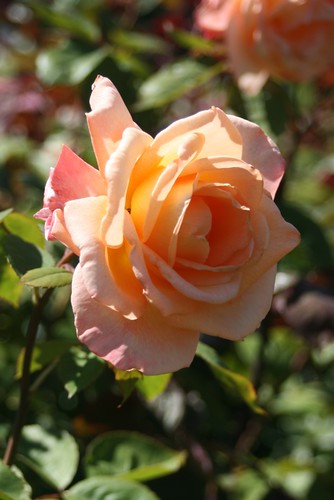
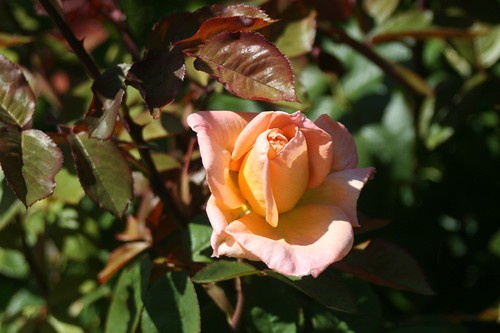
The San Jose Municipal Rose Garden (5.5 acres) is a rose garden located at the intersection of Naglee Avenue and Dana Avenue, San Jose, California, in the Rose Garden neighborhood. It is open to the public daily without charge.

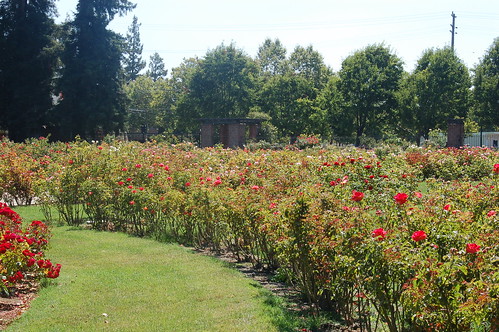
The garden was once a prune orchard, but was bought by San Jose in 1927 and is now exclusively devoted to roses. It features more than 3,500 rose shrubs representing 189 rose varieties.

On May 3, 2004, an estimated 3,500 people attended the memorial service for former NFL safety and U.S. Army Ranger Pat Tillman, who was killed in combat in Afghanistan, in the garden.


from wikipedia.org
images from flickr users: melastmohican, KayMTee, GerryL, Chris, Pinuxette